
Problems Faced by International Students in the UK: Challenges, Solutions, and Practical Guidance

Introduction
Are you planning to study in the UK but worried about fitting into a new education system? Are rising living costs, visa rules, or language barriers making you anxious? Or are you already studying in the UK and finding that reality feels very different from what you expected?
These concerns are common and valid. Every year, hundreds of thousands of international students choose the UK for its globally respected universities, diverse culture, and strong career prospects. However, alongside these opportunities come real challenges. The problems faced by international students in UK universities are not just academic. They often include financial pressure, cultural adjustment, mental health struggles, and strict immigration rules.
This article explores the most common challenges faced by international students in the UK, explains why they occur, and offers practical, experience-based guidance to help students prepare, adapt, and succeed.
Understanding the Context: Why International Students Face Challenges in the UK
The UK has one of the largest international student populations in the world. According to the UK Council for International Student Affairs (UKCISA), international students contribute significantly to the UK economy and academic ecosystem. Yet, they must adapt to a system designed primarily around domestic students.
Several factors shape international students’ experiences:
- A highly independent academic culture
- Strict visa and immigration compliance rules
- A high and rising cost of living
- Cultural and linguistic differences
- Limited access to work opportunities
Understanding this context helps explain why international students’ problems in the UK are structural rather than personal failures.
Academic Challenges for International Students in UK
Adjusting to the UK Education System
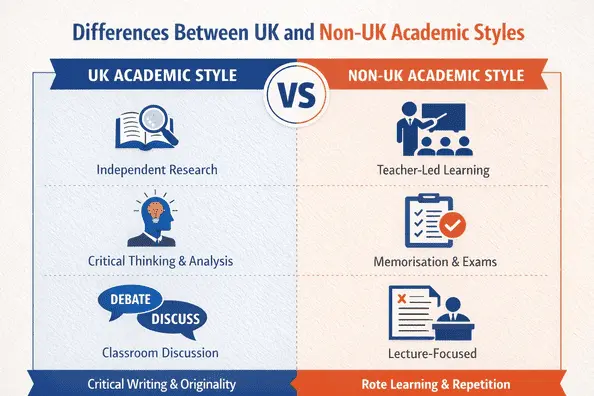
One of the most common academic challenges for international students in the UK is adapting to a different teaching and learning style. UK universities emphasise:
- Independent learning
- Critical thinking
- Self-directed research
- Analytical writing over memorisation
Many students come from education systems where teachers provide detailed guidance and structured learning. In contrast, UK lecturers expect students to read extensively, question ideas, and form original arguments.
According to Universities UK, this transition often causes confusion during the first academic year.
Understanding Assessment and Grading Criteria
UK assessments often include:
- Essays with critical evaluation
- Reflective writing
- Research-based dissertations
- Group projects and presentations
Grading is also different. For example:
| UK Degree Classification | Approximate Meaning |
| First Class (70%+) | Excellent |
| Upper Second (2:1) | Very Good |
| Lower Second (2:2) | Good |
| Third Class | Satisfactory |
Many international students initially struggle to understand what markers expect, especially in essay-based subjects.
Plagiarism Rules and Academic Integrity
Plagiarism is treated very seriously in UK universities. Even unintentional mistakes, such as poor paraphrasing or incorrect referencing, can lead to penalties.
The British Council highlights that international students often face difficulties because citation practices vary across countries. Learning systems like Harvard or APA referencing takes time and guidance.
Language Barriers and Communication Difficulties
Academic English vs Everyday English
Even students who meet IELTS or English language requirements often struggle with academic English. This includes:
- Understanding lectures delivered at speed
- Academic vocabulary and subject-specific terms
- Writing critically rather than descriptively
The British Council notes that conversational fluency does not always translate into academic confidence.
Participation in Class Discussions
Seminars and tutorials in the UK require active participation. Students are expected to:
- Ask questions
- Challenge ideas respectfully
- Engage in debate
For students from cultures where questioning teachers is discouraged, this can feel uncomfortable.
Language barriers can also affect confidence, leading some students to remain silent even when they understand the topic.
Financial Problems International Students UK Commonly Face
High Cost of Living
The cost of living is one of the biggest problems faced by international students in the UK. According to the Office for National Statistics (ONS), the UK has experienced sustained increases in:
- Rent
- Food prices
- Energy bills
- Transport costs
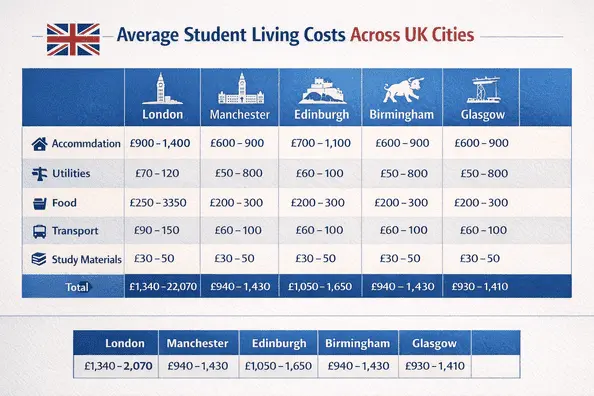
Cities such as London, Manchester, Birmingham, and Edinburgh are particularly expensive.
Typical monthly expenses may include:
- Accommodation
- Utilities
- Food
- Transport
- Study materials
Many students underestimate these costs before arrival.
Tuition Fees and Limited Financial Support
International students pay significantly higher tuition fees than domestic students. Unlike UK students, they usually do not have access to:
- Government student loans
- Most public grants or bursaries
Scholarships exist, but they are competitive and limited.
Currency Fluctuations and Financial Pressure
Students relying on family support from abroad may be affected by exchange rate changes. A weaker home currency can suddenly increase financial stress mid-degree.
Part-Time Work Rule and Employment Challenges
Legal Working Limits
Under UK visa regulations set by the Home Office and explained by UKCISA:
- Students can work up to 20 hours per week during term time
- Full-time work is allowed only during official vacations
Exceeding this limit is a serious visa breach and can result in visa cancellation.
Difficulty Finding Suitable Jobs
Many international students struggle to find part-time work due to:
- Limited local experience
- Language confidence
- Employer misunderstanding of visa rules
Some employers avoid hiring international students altogether due to compliance concerns.
Impact on Academic Balance
Balancing work and studies can be difficult. Working long hours to manage financial problems may negatively affect academic performance and mental health.
Visa Restrictions and Immigration Stress
Strict Compliance Requirements
UK student visas come with strict conditions, including:
- Attendance monitoring
- Academic progression rules
- Restrictions on course changes
Universities are legally required to report non-compliance to the Home Office.
Limited Flexibility
If a student fails a module or needs extra time, visa extensions are not guaranteed. This uncertainty causes anxiety, particularly at postgraduate level.
Post-Study Work Uncertainty
The UK Graduate Route allows eligible students to work for up to two years after graduation. However:
- Not all employers understand or accept this route
- It does not lead directly to permanent residency
This creates stress for students planning long-term careers in the UK.
Culture Shock International Students UK Experience
Social and Cultural Differences
Culture shock is a common issue, especially in the first few months. Students may struggle with:
- British social norms
- Classroom interaction styles
- Informal communication
- Weather and lifestyle differences
The British Council identifies culture shock as a normal adjustment phase rather than a failure to adapt.
Building Social Connections
International students sometimes find it hard to build friendships due to:
- Cultural differences
- Limited interaction outside class
- Living with students from the same background
Without strong social support, feelings of isolation can increase.
Homesickness and Mental Health Challenges
Emotional Adjustment and Loneliness
Homesickness is one of the most overlooked international students’ problems in the UK. Being far from family, familiar food, language, and support systems can lead to:
- Loneliness
- Anxiety
- Low motivation
This is particularly common during the first year or winter months.
Access to Mental Health Support
The NHS provides healthcare access, but waiting times for counselling can be long. University wellbeing services exist, but demand often exceeds capacity.
Universities UK acknowledges that international students may hesitate to seek help due to:
- Cultural stigma
- Language concerns
- Lack of awareness of services

Practical Solutions and Best Practices for International Students
Academic Success Strategies
- Attend academic skills workshops offered by universities
- Use writing centres and library support early
- Ask lecturers for clarification during office hours
- Learn referencing systems properly from the start
Managing Finances Wisely
- Create a realistic monthly budget
- Choose accommodation carefully
- Use student discounts and travel cards
- Avoid exceeding legal work limits
Coping with Culture Shock and Homesickness
- Join student societies and international groups
- Maintain regular contact with family
- Build routines and healthy habits
- Seek support early if feeling overwhelmed
Staying Visa-Compliant
- Understand your visa conditions fully
- Keep records of attendance and work hours
- Speak to your university’s international office before making changes
Supporting Resources and Trusted Organisations
- UKCISA: Authoritative guidance on visas and student rights
- British Council – Study UK: Cultural and academic transition support
- Universities UK: Higher education policies and student wellbeing insights
- NHS UK: Healthcare and mental health services information
- gov.uk: Official visa and immigration rules
Conclusion
The problems faced by international students in UK universities are real, complex, and often interconnected. Academic pressure, financial strain, visa restrictions, language barriers, and emotional challenges can make studying abroad overwhelming at times.
However, these challenges are not insurmountable. With accurate information, realistic expectations, and early use of support systems, international students can adapt successfully and thrive in the UK education system.
Understanding these issues before arrival or early in your studies empowers you to make informed decisions, seek help confidently, and focus on achieving your academic and personal goals.
Frequently Asked Questions (FAQs)
What are the biggest challenges faced by international students in the UK?
The most common challenges include high living costs, academic adjustment, visa restrictions, language barriers, and mental health challenges.
Are international students allowed to work part-time in the UK?
Yes, most student visa holders can work up to 20 hours per week during term time, according to UK Home Office rules.
Why do international students struggle academically in the UK?
Many struggle due to differences in teaching styles, independent learning expectations, and unfamiliar assessment methods.
How expensive is it for international students to live in the UK?
Living costs vary by city, but expenses such as rent, food, and transport have increased significantly, according to the Office for National Statistics.
Do UK universities provide mental health support for international students?
Yes, most universities offer wellbeing services, though access and waiting times can vary.
How can international students reduce culture shock in the UK?
Engaging in student societies, learning about UK culture, and building diverse social networks can help ease the transition.