
99 Top Mass Communications Dissertation Topics for 2026
Introduction
Choosing a dissertation topic in mass communication is one of the most important academic decisions a student will make. It defines the direction of your research, the quality of your analysis, and your final academic performance. A strong topic must be relevant, researchable, and aligned with current media developments.
For students exploring mass communications dissertation topics, the challenge is not a lack of ideas but too many conflicting directions. Media is constantly evolving through digital platforms, artificial intelligence, and global communication networks, which makes topic selection both exciting and overwhelming.
A well-selected dissertation topic helps you demonstrate critical thinking, research ability, and understanding of modern communication systems. It also ensures that your work contributes meaningfully to academic discussions in media and communication studies.
Why Choosing the Right Dissertation Topic in Mass Communication Matters
A dissertation topic is not just an academic requirement. It shapes your entire research journey. In mass communication, the topic determines whether your study contributes to meaningful media analysis or remains too general to be impactful.
A strong topic ensures:
- Clear research direction and focus
- Better access to academic sources and data
- Alignment with current media and communication trends
- Higher chances of scoring well in evaluation criteria
Students working on mass communication research topics often succeed when they choose areas connected to real-world media challenges such as digital influence, journalism ethics, and social media communication.
Key Research Areas in Mass Communication
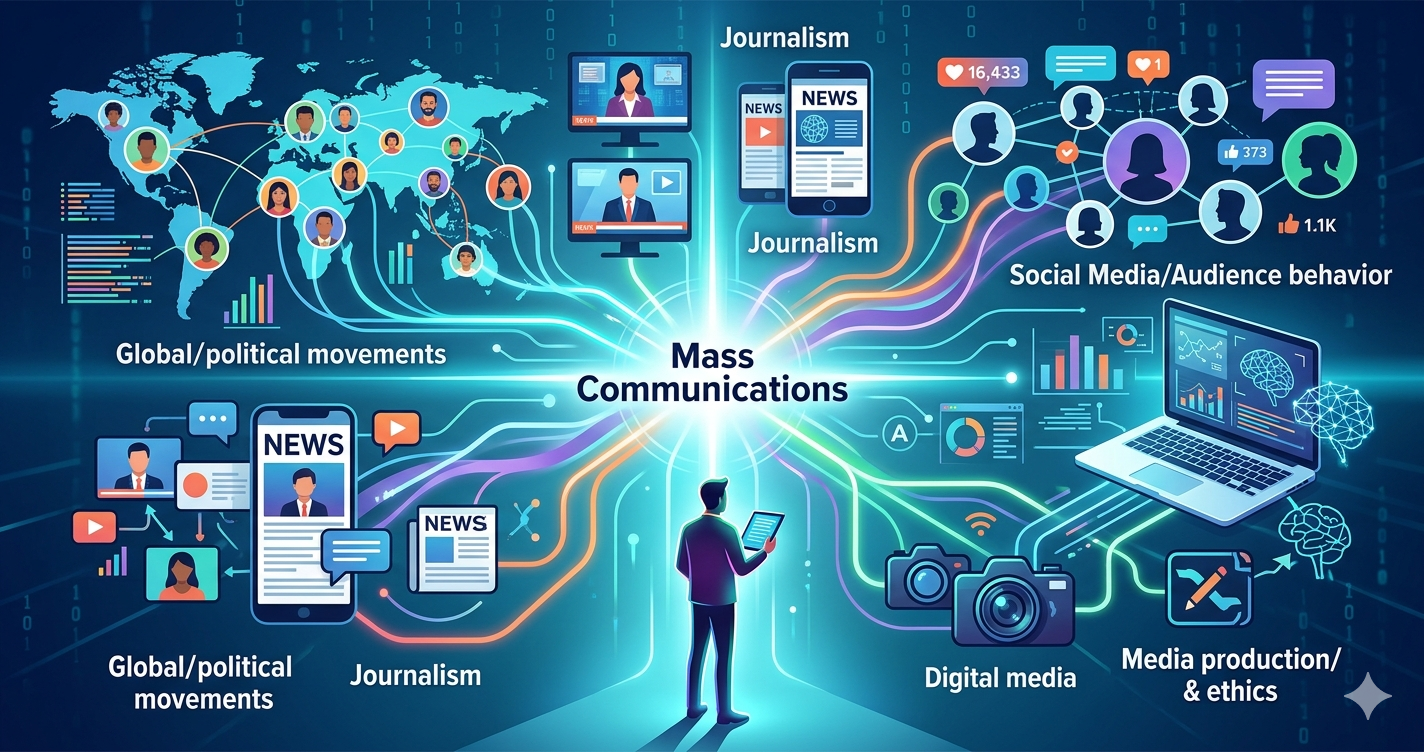
Mass communication is a broad field that includes several established academic domains. Understanding these helps you narrow down your dissertation focus effectively.
Common research areas include:
- Media studies and audience behaviour
- Journalism and news reporting systems
- Digital communication and online platforms
- Public relations and strategic messaging
- Advertising and brand communication
- Political communication and media influence
- Social media engagement and analytics
These areas form the foundation of media and mass communication dissertation topics and help students connect theory with real-world media systems.
Download media-studies Dissertation Example Pdf
Students often struggle to visualise what a strong dissertation looks like in practice. A structured reference can make topic selection and proposal writing much easier.
Many academic platforms offer downloadable PDFs that include sample proposals, literature review structures, and topic breakdowns for mass communication research. These resources are especially helpful for students who want clear guidance on formatting, methodology, and academic expectations.
If you are unsure about how to begin, a curated PDF can provide direction, improve clarity, and help you understand how successful dissertations are structured at university level.
Impact of Digital Media on Communication and Society
- Impact of short-form video content on youth attention span
- Role of digital media in shaping public opinion
- Influence of algorithm-driven news feeds on audience behaviour
- Social media dependency and mental wellbeing among students
- Evolution of digital journalism in the age of AI
- Effect of online influencers on consumer decision-making
- Role of podcasts in modern information dissemination
- Digital storytelling and audience engagement strategies
- Impact of streaming platforms on traditional television media
- Social media addiction and academic performance
- Rise of citizen journalism in digital environments
- Role of memes in political communication
- Digital media literacy among university students
- Impact of online news portals on print journalism
- Influence of social networking sites on cultural identity
- Role of mobile communication in shaping news consumption
- Effects of digital advertising on consumer trust
- Transformation of media consumption patterns post-pandemic
- Role of YouTube creators in educational communication
- Digital communication and misinformation spread
- Impact of virtual communities on social interaction
- Changing role of media organisations in digital ecosystems
Representation and Ethics in Media
- Gender representation in mainstream media content
- Ethical challenges in investigative journalism
- Representation of minorities in global news coverage
- Media bias and its impact on public trust
- Ethical implications of deepfake technology in media
- Representation of mental health in television programming
- Objectification of gender in advertising campaigns
- Media responsibility in crisis reporting
- Ethical issues in social media content moderation
- Representation of youth culture in digital media
- Fake news and journalistic accountability
- Cultural stereotyping in global media platforms
- Ethics of influencer marketing in digital spaces
- Representation of disability in media narratives
- Sensationalism in modern journalism practices
- Ethical concerns in data-driven journalism
- Media portrayal of political figures and bias
- Responsibility of media in disaster communication
- Privacy issues in digital news reporting
- Representation of climate change in mass media
- Ethical challenges in advertising to children
- Role of editorial policies in maintaining media ethics
Media’s Role in Global and Political Movements
- Role of social media in political activism
- Media influence on election campaigns
- Impact of digital platforms on protest movements
- Political communication strategies in the digital age
- Role of mass media in shaping public policy awareness
- Media framing of international conflicts
- Influence of news media on voter behaviour
- Role of journalism in democratic accountability
- Digital activism and youth political engagement
- Media coverage of global humanitarian crises
- Role of communication strategies in political branding
- Social media influence on political polarisation
- Media representation of government policies
- Role of online campaigns in political mobilisation
- Impact of misinformation on political stability
- Media influence on international diplomacy
- Role of press freedom in democratic societies
- Digital communication in political protest coordination
- Media coverage of human rights movements
- Role of mass communication in civic education
- Influence of political advertising on public perception
- Comparative study of media systems in global politics
Technological Advances and Their Effects on Media
- Role of artificial intelligence in content creation
- Impact of machine learning on media analytics
- Automation in journalism and newsroom efficiency
- Virtual reality in immersive storytelling
- Role of augmented reality in advertising campaigns
- Blockchain technology in media distribution systems
- AI-generated news and ethical implications
- Data analytics in audience targeting strategies
- Impact of 5G technology on media consumption
- Evolution of digital broadcasting systems
- Role of chatbots in customer communication strategies
- AI in personalised content recommendation systems
- Cybersecurity challenges in digital media platforms
- Technological transformation of radio broadcasting
- Role of automation in advertising optimisation
- Use of big data in media planning
- Impact of smart devices on communication habits
- Cloud computing in media storage and distribution
- Future of journalism in AI-driven environments
- Technological innovation in film and media production
- Role of predictive analytics in media campaigns
- Digital transformation in traditional media organisations
Emerging Trends and Challenges in Media and Communication
- Future of mass communication in the digital era
- Rise of personalised content ecosystems
- Challenges of misinformation in social media platforms
- Audience fragmentation in modern media landscapes
- Sustainability in media production practices
- Cross-cultural communication in global media
- Evolution of influencer economy in digital marketing
- Role of immersive media in education systems
- Ethical challenges in AI-driven communication
- Future of print media in digital transformation
- Role of social listening in brand communication
- Impact of subscription-based media models
- Evolution of global news consumption habits
- Media convergence and content integration trends
- Role of user-generated content in modern journalism
- Challenges in maintaining media credibility
- Growth of niche digital communities
- Media literacy challenges in the misinformation era
- Role of communication strategies in crisis management
- Future of public relations in digital-first environments
- Impact of globalisation on media narratives
- Strategic communication in competitive media markets
Mass Communications Dissertation Topics With Research Aims and Objectives
Below are carefully structured mass communications dissertation topics with clear research aims and 2–3 objectives each. These are designed for undergraduate, master’s, and early PhD-level students in Media Studies, digital communication, journalism, and public relations.
1. Impact of Social Media on Youth Communication Behaviour
Research Aim:
To analyse how social media platforms influence the communication habits and interaction styles of young people.
Research Objectives:
- To examine changes in face-to-face communication among youth
- To assess the role of social media in shaping digital expression
- To evaluate psychological and social effects of constant connectivity
2. Role of Digital Journalism in Modern News Consumption
Research Aim:
To explore how digital journalism has transformed the way audiences consume news.
Research Objectives:
- To compare digital and traditional news consumption patterns
- To analyse credibility perceptions of online news platforms
- To investigate the role of speed and accessibility in news engagement
3. Influence of Influencer Marketing on Consumer Behaviour
Research Aim:
To investigate how influencers affect purchasing decisions in digital environments.
Research Objectives:
- To study trust factors between influencers and audiences
- To evaluate the effectiveness of sponsored content
- To analyse engagement levels across different social media platforms
4. Media Representation of Mental Health Issues
Research Aim:
To examine how mental health is portrayed in mainstream media and its social implications.
Research Objectives:
- To analyse accuracy of mental health reporting in media
- To evaluate public perception shaped by media narratives
- To identify ethical concerns in mental health coverage
5. Role of Social Media in Political Awareness
Research Aim:
To assess how social media platforms contribute to political awareness and engagement.
Research Objectives:
- To evaluate the impact of digital campaigns on voter awareness
- To analyse user engagement with political content online
- To study misinformation risks in political communication
Conclusion
Selecting a dissertation topic in mass communication requires clarity, research awareness, and understanding of current media trends. A strong topic is not just relevant to academic requirements but also meaningful in real-world communication environments.
Students should focus on areas that align with their interests while remaining grounded in established academic frameworks. With the right topic, research becomes more structured, engaging, and impactful.
Approach your dissertation as a long-term academic contribution rather than a short-term assignment. The quality of your topic will directly influence the strength of your final work.