
Microbiology Dissertation Topics for 2026: A Complete Guide for UK Students
Student Questions (Before We Begin)
Students across the UK frequently turn to forums, Reddit threads, and academic discussion platforms when they feel stuck choosing a dissertation topic. The questions below reflect genuine concerns gathered from those spaces, and this blog post answers every one of them.
- What are the best microbiology dissertation topics for 2026?
- How do I find a dissertation topic in microbiology that is narrow enough to research?
- Are there microbiology dissertation topics suitable for undergraduates?
- What are the latest microbiology research topics being studied right now?
- Can you show me microbiology dissertation topics with examples, including aims and objectives?
- Where can I get help with choosing a topic that matches my academic level?
- What microbiology research topics are relevant to public health and the environment?
If any of these questions sound familiar, you are in the right place. This guide covers all of them, clearly and in one place.
Why Choosing the Right Microbiology Dissertation Topic Matters
Choosing the right dissertation topic is one of the most important academic decisions you will make. In microbiology, this choice shapes your research direction, the methods you will use, and the real-world relevance of your work.
A well-chosen topic allows you to demonstrate genuine understanding of the subject, contribute meaningfully to academic knowledge, and show your supervisor that you can think independently. A poorly chosen topic, on the other hand, can leave you feeling lost, unable to find enough sources, or stuck with a question too broad to answer in one dissertation.
Microbiology is a rapidly evolving field. Topics that were considered niche five years ago, such as microbiome research or antimicrobial resistance, are now central to global health conversations. Choosing a topic that reflects current academic priorities gives your dissertation greater relevance and impact.
Whether you are writing at undergraduate, master’s, or PhD level, your topic must be focused, researchable, and clearly connected to existing academic literature. This guide is designed to help you get there with confidence.
Download Microbiology Dissertation Topics PDF
If you prefer a curated list you can save and review offline, you can request a downloadable PDF of microbiology dissertation topics prepared by academic subject specialists. This PDF includes topics organised by subfield and academic level, making it easier to find the right starting point for your research proposal.
Students who need help with dissertation topic selection often find it useful to have a structured list ready before their first supervisor meeting. The PDF gives you that preparation. Simply reach out through the contact page to receive your personalised copy.
Key Research Areas in Microbiology for 2026
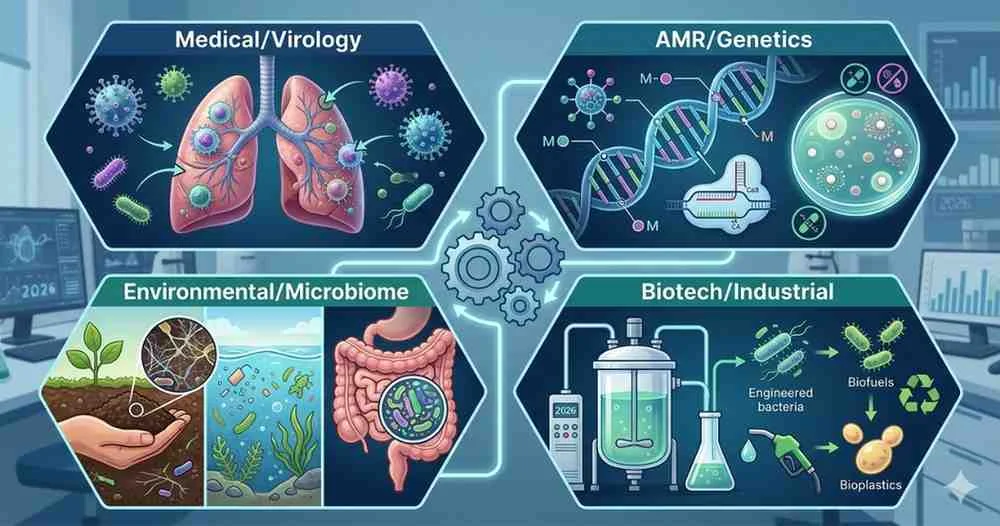
Before jumping into topic ideas, it helps to understand the main research areas within microbiology. These are established domains actively studied in universities across the UK and internationally. Knowing them helps you position your dissertation within a recognised academic space.
Medical Microbiology and Infectious Diseases This area covers how pathogens cause disease, how they spread, and how the human body responds. Topics related to bacteria and viruses, pathogen detection, and vaccine development fall within this area.
Environmental Microbiology This subfield studies microorganisms in natural environments, including soil, water, and air. Environmental microbiology dissertation topics often explore how microbial communities affect ecosystems or how pollution changes microbial behaviour.
Antimicrobial Resistance (AMR) AMR is one of the most urgent challenges in global health. Research in this area focuses on how microbes develop resistance to antibiotics and what can be done to slow or reverse this trend.
Microbial Genetics and Genomics This area examines the genetic makeup of microorganisms, including how genes are transferred between bacteria and how mutations affect microbial behaviour.
Virology and Immunology Virology focuses on viruses and how they replicate, infect hosts, and evolve. Immunology explores how the human and animal immune system responds to microbial threats.
Industrial and Biotechnology Microbiology This growing area includes microbial applications in food production, pharmaceutical manufacturing, biofuel development, and waste management.
Public Health Microbiology This field bridges laboratory science and community health, focusing on how microbial threats are detected, monitored, and controlled at population level.
Microbiology Dissertation Topics With Examples: Aims and Objectives
Before exploring the full list, it is helpful to understand how a strong dissertation topic is structured. Below are five microbiology dissertation topics with examples, each with a clear aim and research objectives.
Example 1
Topic: The role of gut microbiome diversity in managing Type 2 diabetes in adults
Aim: To investigate how changes in gut microbiome composition relate to blood glucose regulation in adults diagnosed with Type 2 diabetes.
Objectives:
- To review existing literature on gut microbiome changes in diabetic patients
- To compare microbiome profiles between diabetic and non-diabetic adult populations
- To identify specific microbial species associated with improved metabolic outcomes
Example 2
Topic: Antibiotic resistance patterns in hospital-acquired E. coli infections in NHS settings
Aim: To examine the prevalence and patterns of antimicrobial resistance in E. coli strains isolated from NHS patients.
Objectives:
- To analyse resistance gene profiles in hospital-acquired E. coli isolates
- To assess the effectiveness of current antibiotic treatment protocols
- To evaluate the role of infection control practices in limiting resistance spread
Example 3
Topic: Evaluating the impact of agricultural pesticide use on soil microbial communities in the UK
Aim: To assess how prolonged pesticide application affects the diversity and function of microbial communities in UK agricultural soils.
Objectives:
- To measure microbial diversity in pesticide-treated versus untreated soil samples
- To identify which pesticide compounds cause the greatest microbial disruption
- To recommend practices that support soil microbial health in farming environments
Example 4
Topic: CRISPR-based diagnostics for rapid detection of respiratory viruses in clinical settings
Aim: To evaluate the accuracy and speed of CRISPR-based detection tools compared to standard PCR methods for respiratory viruses.
Objectives:
- To review published clinical trials involving CRISPR diagnostic systems
- To compare sensitivity and specificity outcomes between CRISPR and PCR platforms
- To assess feasibility of CRISPR diagnostics in under-resourced healthcare settings
Example 5
Topic: The microbial contamination of urban water systems and its implications for public health in England
Aim: To investigate microbial contamination levels in urban drinking water and assess associated public health risks.
Objectives:
- To identify common microbial contaminants detected in urban water supplies
- To evaluate current water treatment methods and their effectiveness
- To explore gaps in monitoring practices and regulatory compliance
A Comprehensive List of Microbiology Dissertation Topics for 2026
The following section contains more than 100 carefully selected microbiology research topics for students, organised by subfield. Each topic is specific, researchable, and suitable for undergraduate, master’s, or PhD level work.
Medical Microbiology and Infectious Diseases
- The emergence of multi-drug-resistant Staphylococcus aureus in UK care homes
- Biofilm formation in Pseudomonas aeruginosa and its role in chronic lung infections
- The impact of COVID-19 on secondary bacterial infections in hospitalised patients
- Virulence mechanisms of Clostridioides difficile in antibiotic-associated diarrhoea
- The role of Helicobacter pylori in gastric cancer development in UK populations
- Tick-borne diseases in the UK: emerging Lyme disease patterns and microbial factors
- Comparative analysis of influenza A and B viral replication in human epithelial cells
- The relationship between urinary tract infection recurrence and microbial biofilm persistence
- Investigating the link between oral microbiota dysbiosis and cardiovascular disease
- How Mycobacterium tuberculosis evades macrophage killing mechanisms
Antimicrobial Resistance Research
- The spread of extended-spectrum beta-lactamase (ESBL) producing bacteria in community settings
- Horizontal gene transfer and its role in disseminating resistance among gut bacteria
- Phage therapy as an alternative to antibiotics: current evidence and future potential
- The contribution of over-the-counter antibiotic sales to resistance in lower-income countries
- Resistance profiling of Klebsiella pneumoniae in intensive care units across England
- How sub-inhibitory antibiotic concentrations accelerate resistance development in bacteria
- Evaluating colistin resistance in Gram-negative bacteria following its use as a last-resort antibiotic
- The role of antibiotic stewardship programmes in reducing resistance in NHS hospitals
- Comparing resistance gene profiles of Enterococcus faecalis in human and animal isolates
- Mobile genetic elements and their contribution to antibiotic resistance in environmental bacteria
Environmental Microbiology Dissertation Topics
- Microbial diversity in urban river sediments and its response to seasonal pollution changes
- The effect of microplastics on soil bacterial communities in agricultural land
- Carbon cycling and the role of methanogenic archaea in peatland ecosystems
- Nitrogen fixation by rhizobial bacteria and its significance for sustainable agriculture
- Bioremediation potential of hydrocarbon-degrading bacteria in oil-contaminated soils
- Cyanobacterial blooms in freshwater lakes: causes, microbial dynamics, and public health risks
- Microbial communities in glacial ice cores and what they reveal about historical climate conditions
- The role of mycorrhizal fungi in plant health and drought resistance in UK forests
- Investigating sulphur-reducing bacteria in anaerobic sediments of estuarine environments
- How urbanisation changes the microbial composition of local air environments
Microbiome Research
- The gut-brain axis: how intestinal microbiota influence anxiety and depression
- Differences in infant gut microbiome development between breastfed and formula-fed babies
- The impact of vegan and omnivore diets on gut microbiome diversity in UK adults
- Microbiome changes associated with inflammatory bowel disease in young adults
- How antibiotic use in early childhood alters long-term microbiome composition
- The skin microbiome and its relationship to eczema and atopic dermatitis
- Oral microbiome dysbiosis and its association with systemic inflammatory conditions
- Faecal microbiota transplantation: clinical outcomes and microbial mechanisms of action
- How physical exercise affects the diversity of the gut microbiome in middle-aged adults
- Vaginal microbiome composition and its role in preterm birth risk
Virology and Immunology
- The molecular mechanisms of SARS-CoV-2 spike protein evolution and immune evasion
- Oncolytic viruses as a cancer treatment strategy: evidence from clinical trials
- Reactivation of latent herpesvirus infections during immune suppression therapy
- Zoonotic potential of bat-associated coronaviruses circulating in Europe
- Immune response variation to seasonal influenza vaccines across different age groups
- The role of innate immune signalling pathways in controlling norovirus infection
- Cross-reactive T cell immunity between influenza strains and its implications for vaccine design
- Mpox virus transmission dynamics and host immune responses in the 2022 outbreak
- How respiratory syncytial virus (RSV) evades adaptive immunity in elderly patients
- Neutralising antibody persistence following mRNA vaccination against SARS-CoV-2
Microbial Genetics and Genomics
- Whole-genome sequencing applications in outbreak investigation of foodborne pathogens
- Comparative genomics of pathogenic and non-pathogenic strains of E. coli
- The role of CRISPR-Cas systems in bacterial immune defence and genome editing potential
- Plasmid dynamics in antibiotic-resistant bacterial populations in wastewater
- Epigenetic regulation of virulence gene expression in Salmonella enterica
- Horizontal gene transfer between gut bacteria and its effect on metabolic function
- Metagenomics approaches to characterising microbial communities in deep-sea sediments
- Transcriptomic analysis of Mycobacterium tuberculosis response to antibiotic stress
- Functional genomics of toxin-antitoxin systems in bacterial persistence
- The genetic basis of biofilm formation in Listeria monocytogenes in food environments
Public Health Microbiology
- The epidemiology of norovirus outbreaks in care homes and healthcare settings in England
- Evaluating water quality standards in rural UK communities using microbial indicators
- Surveillance of Campylobacter in poultry supply chains and its public health impact
- How antimicrobial resistance is monitored and reported across UK public health systems
- The role of travel medicine clinics in detecting and containing imported infectious diseases
- Community transmission patterns of methicillin-resistant Staphylococcus aureus (MRSA)
- Microbial safety of street food in urban UK markets: risk assessment and intervention
- The effectiveness of hand hygiene campaigns in reducing hospital-acquired infections
- Airborne transmission of Aspergillus spores in hospital environments and immunocompromised patients
- How vaccine hesitancy affects the re-emergence of measles in previously controlled populations
Industrial and Biotechnology Microbiology
- Optimising lactic acid fermentation using engineered Lactobacillus strains for food production
- Microbial production of bioplastics: current yields, limitations, and scale-up potential
- The use of Trichoderma species as biological control agents in sustainable agriculture
- Fermentation efficiency of Saccharomyces cerevisiae under varying pH and temperature conditions
- Engineering E. coli for the biosynthesis of pharmaceutical-grade insulin precursors
- Biogas production from anaerobic digestion of municipal solid waste: microbial community analysis
- The role of extremophilic bacteria in developing heat-stable industrial enzymes
- Microbial fuel cells and their potential for sustainable electricity generation from wastewater
- Using microalgae for carbon capture: microbial performance and scalability
- Developing microbial biosensors for real-time detection of heavy metals in water supplies
Food and Agricultural Microbiology
- Microbial contamination risks in minimally processed ready-to-eat foods in the UK
- The effect of cold chain disruptions on Listeria growth in chilled dairy products
- Biocontrol of Fusarium in wheat crops using antagonistic soil bacteria
- How probiotic supplementation affects microbial populations in commercial poultry farming
- Bacteriophage applications in controlling Salmonella contamination in food processing plants
- Microbial ecology of traditional cheese production and its effect on flavour profiles
- The role of lactic acid bacteria in extending the shelf life of fermented vegetables
- Detecting Cronobacter sakazakii in powdered infant formula: methods and risk mitigation
- How organic farming practices affect the microbial diversity of soil and crop surfaces
- The impact of food irradiation on microbial load and nutritional content of fresh produce
Masters Microbiology Dissertation Topics: Clinical and Diagnostic Focus
- Evaluating loop-mediated isothermal amplification (LAMP) for rapid TB diagnosis in low-resource settings
- Antimicrobial susceptibility testing methods: comparing disc diffusion and broth microdilution outcomes
- The diagnostic accuracy of next-generation sequencing in identifying rare fungal infections
- Lateral flow assays for point-of-care detection of Streptococcus pneumoniae in community settings
- Evaluating MALDI-TOF mass spectrometry for clinical pathogen identification in NHS laboratories
- Biomarker development for early detection of sepsis caused by Gram-negative bacteria
- How artificial intelligence is improving accuracy in microbial identification from clinical samples
- Developing multiplex PCR panels for simultaneous detection of sexually transmitted infections
- The clinical utility of metagenomic sequencing in diagnosing culture-negative meningitis
- Comparing culture-based and molecular methods for detecting antimicrobial resistance in urine samples
Emerging and Specialist Microbiology Research Topics
- The role of the virome in human health and its interaction with the bacterial microbiome
- Fungal microbiome composition in immunocompromised patients and associated infection risks
- Investigating prion disease mechanisms and the protein misfolding pathway
- Synthetic biology applications in creating minimal bacterial cells for research and therapy
- The microbiology of space travel: how microgravity alters microbial behaviour and virulence
- Archaeal diversity in human gut microbiomes and its metabolic significance
- Anti-biofilm coatings on medical devices: material science and microbial resistance outcomes
- Exploring the microbiome of ancient archaeological samples using ancient DNA techniques
- The role of quorum sensing in coordinating virulence in polymicrobial wound infections
- How climate change is expanding the geographic range of vector-borne microbial pathogens
How to Choose the Right Topic From This List
With more than 100 options available, the challenge now is not finding a topic but selecting the one that fits your academic level, available resources, and personal interest.
Start by identifying which subfield you feel most drawn to. If you enjoy laboratory work, topics in microbial genetics or clinical diagnostics may suit you. If you prefer research with social relevance, public health microbiology or environmental topics may be a better fit.
Consider your access to data, equipment, and supervision expertise. A topic on CRISPR diagnostics may require specialist laboratory access that not all institutions provide. A topic on antibiotic resistance patterns in community settings may be more accessible using publicly available NHS datasets.
If you still feel unsure, speaking with your supervisor early is the most effective step. Bring two or three topics you are considering and discuss which one fits your institution’s research strengths. Students who need microbiology dissertation help at this stage often benefit from structured academic support before committing to a topic.
What Makes a Microbiology Dissertation Topic Academically Strong?
Not all research questions are equal. A strong microbiology thesis topic has several qualities that set it apart.
It is specific. A topic like “bacteria and viruses in hospitals” is too broad. A topic like “biofilm-forming bacteria on ICU catheter surfaces in NHS England hospitals” is specific and researchable.
It is grounded in existing literature. Your topic should connect to published research. If you cannot find at least 15 to 20 peer-reviewed sources on your topic, it may be too niche or too new.
It has clear academic value. Ask yourself: what gap does this research fill? Strong topics address a question that existing research has not fully answered.
It is feasible within your time and resource limits. The best topic in the world is useless if you cannot complete it within your academic timeline. Be realistic about what your institution can support.
It matches your level. Undergraduate microbiology dissertation topics for undergraduate students should be well-defined and achievable within a single academic year. Master’s and PhD topics should show greater complexity, methodological depth, and original contribution.
Latest Microbiology Research Topics: Trends Shaping 2026
Understanding what is trending in microbiology research right now helps you position your dissertation as relevant and timely. The following areas are generating significant academic attention in 2026.
Antimicrobial resistance continues to be a top priority, with the World Health Organization and UK Government both classifying it as a critical global threat. Research funding in this area remains strong.
Microbiome science has expanded rapidly. The relationship between gut bacteria and conditions ranging from mental health to autoimmune diseases is now one of the most published areas in biomedical research.
Pathogen detection technology has advanced significantly, with CRISPR-based diagnostics and AI-assisted microbial identification now moving from research labs to clinical applications.
Environmental microbiology has grown in importance as climate change, agricultural intensification, and plastic pollution raise new questions about microbial ecosystem function.
Phage biology and therapy is experiencing renewed interest as a potential solution to antibiotic-resistant infections, with several clinical trials underway in the UK and Europe.
Choosing a topic connected to any of these trends means your research is more likely to be well-supported by existing literature and relevant to current academic conversations.
Conclusion
Selecting the right dissertation topic is the foundation of a successful research project. This guide has provided you with more than 100 original and up-to-date microbiology dissertation topics, five structured examples with aims and objectives, and a clear overview of the key research areas shaping the field in 2026.
Good topic selection is not about finding something impressive. It is about finding something you can research deeply, defend confidently, and contribute to meaningfully. The topics in this guide are designed to help you do exactly that.
Approach your dissertation with curiosity, patience, and academic honesty. Use this list as a starting point for discussion with your supervisor, not as a final answer. The best dissertation topic is one that connects your interests with genuine academic value.
If you need further support, structured microbiology thesis writing service or academic guidance is available to help you develop your topic into a full research proposal. You do not have to navigate this process alone.