
Biology Dissertation Topics for 2026: 100+ Research Ideas for Undergraduate, Master’s & PhD Students
Questions Students Are Asking About Biology Dissertation Topics
The questions below have been collected from student forums, academic discussion boards, and university Q&A platforms. They reflect the real concerns students face when trying to choose a biology dissertation topic.
- How do I choose a biology dissertation topic that is original and academically strong?
- What are the latest biology research topics I can explore for my dissertation in 2026?
- Are there biology dissertation topics suitable for undergraduate level, or are most ideas only for postgraduate students?
- What makes a good biology thesis topic different from a general research idea?
- Which subfields of biology are most active for research right now?
- Can you give me biology dissertation topics with examples of research aims and objectives?
- Where can I get biology dissertation help if I am struggling with my topic?
If you have asked yourself any of these questions, this blog post is written for you.
Why Choosing the Right Biology Dissertation Topic Matters
Selecting the right biology dissertation topic is one of the most important academic decisions you will make during your degree. A well-chosen topic sets the foundation for your entire research journey. It shapes the literature you read, the methods you use, and the contribution you make to your field.
Biology is an exceptionally broad subject. It spans everything from the smallest molecular interactions inside a single cell to the large-scale dynamics of entire ecosystems. This breadth is both exciting and overwhelming. Students often struggle to narrow down their interests into a focused, researchable question.
Choosing a topic that is too broad leads to shallow research. Choosing one that is too narrow may limit your access to literature and data. The ideal biology dissertation topic sits in the middle: it is specific enough to be manageable, yet significant enough to contribute something meaningful to biological science.
In 2026, biology is at the centre of some of the most urgent global conversations, including climate resilience, antimicrobial resistance, genetic therapies, and biodiversity loss. This makes it an ideal time to pursue biological science dissertation topics that connect academic rigour with real-world relevance.
Download Biology Dissertation Topics PDF
Would you like a personalised list of biology dissertation topics curated by academic experts? Students can request a downloadable PDF that includes topics matched to their academic level, subfield interest, and university requirements. This service is offered by experienced researchers who understand what universities expect from undergraduate, master’s, and PhD dissertations. Simply reach out through the website to receive your customised topic list, free of charge.
Unique Biology Dissertation Topics With Research Aims
Before exploring the full list of topics, it helps to understand how a strong dissertation topic is structured. A good topic always comes with a clear research aim and a set of focused objectives. Below are five examples that demonstrate this structure.
Example 1: The Role of Microbiome Diversity in Antibiotic Resistance
Research Aim: To investigate how gut microbiome diversity influences the development and spread of antibiotic-resistant bacteria in adult humans.
Research Objectives:
- To review existing literature on microbiome composition and antibiotic resistance patterns.
- To analyse the relationship between reduced microbiome diversity and resistance gene prevalence using existing clinical datasets.
- To identify which microbial taxa are most associated with resistance acquisition.
Example 2: Climate Change and Coral Bleaching in Tropical Marine Ecosystems
Research Aim: To examine the relationship between rising sea surface temperatures and coral bleaching events across selected tropical reef systems.
Research Objectives:
- To document coral bleaching frequency and severity in relation to sea temperature data over the past two decades.
- To assess the recovery capacity of bleached coral reefs under different temperature scenarios.
- To evaluate conservation interventions currently in use and their ecological effectiveness.
Example 3: CRISPR-Cas9 Gene Editing and Ethical Frameworks in Biomedical Applications
Research Aim: To critically evaluate the scientific potential and ethical limitations of CRISPR-Cas9 technology in treating inherited human diseases.
Research Objectives:
- To review the current clinical applications of CRISPR in gene therapy trials.
- To analyse key ethical frameworks governing germline editing in the United Kingdom and European Union.
- To assess public perception of genetic modification in medical treatment contexts.
Example 4: Urban Ecology and the Adaptation of Native Bird Species to City Environments
Research Aim: To explore how urbanisation affects the behavioural and physiological adaptations of native bird species in British cities.
Research Objectives:
- To compare behavioural patterns of urban and rural populations of the same species.
- To assess the impact of urban noise, artificial light, and food availability on reproductive success.
- To recommend evidence-based urban planning strategies that support avian biodiversity.
Example 5: Epigenetic Mechanisms in the Onset of Type 2 Diabetes
Research Aim: To investigate the role of epigenetic modifications in the development of type 2 diabetes, focusing on DNA methylation patterns.
Research Objectives:
- To identify key genes affected by epigenetic silencing in diabetic versus non-diabetic populations.
- To examine how lifestyle factors such as diet and physical activity alter DNA methylation profiles.
- To assess the potential of epigenetic biomarkers as early diagnostic tools for type 2 diabetes.
How Can ResearchProspect Help?
If you are a student working on your dissertation in biology, ResearchProspect offers professional academic support tailored to your level of study. The team includes subject specialists in genetics, molecular biology, ecology, microbiology, and many other biological subfields. Whether you need help refining a topic, building a proposal, or completing a full dissertation, expert support is available. Students searching for biology dissertation help will find ResearchProspect’s services both reliable and academically responsible.
Categories for Research in Biology
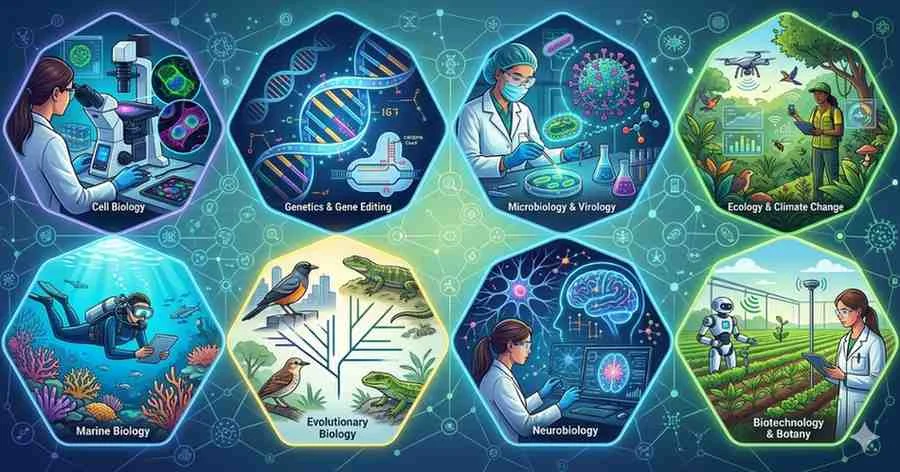
Biology is not a single discipline. It is a collection of interconnected subfields, each offering unique opportunities for dissertation research. Understanding these categories helps you identify where your interests and your university’s strengths overlap.
Molecular Biology and Genetics focuses on the mechanisms of inheritance, gene expression, and molecular interactions. It is among the most technically advanced areas in biological sciences.
Microbiology studies microorganisms, including bacteria, viruses, fungi, and protozoa. In 2026, microbiology research is closely linked to public health, antimicrobial resistance, and infectious disease control.
Ecology and Environmental Biology examines how living organisms interact with their environment and with each other. Research in this area is increasingly urgent due to climate change and biodiversity loss.
Cell Biology explores the structure and function of cells, including how they grow, divide, communicate, and die. It underpins much of what we know in biomedical science.
Evolutionary Biology investigates how species change over time in response to environmental pressures, genetic mutation, and natural selection.
Marine and Aquatic Biology studies organisms living in freshwater and marine environments, with growing focus on ocean acidification and habitat destruction.
Neurobiology and Behavioural Biology explores the biological basis of behaviour, including how the nervous system processes information and drives action.
Biotechnology involves applying biological knowledge to develop practical tools and products, from pharmaceuticals to genetically modified crops.
Each of these categories contains dozens of potential dissertation topics. The section below provides more than 100 unique ideas distributed across these subfields.
List of Free Biology Dissertation Topics
The topics below are organised by subfield. They are numbered in fixed ranges to help you navigate the list easily. All topics are suitable for 2026-level research and have been selected to reflect current academic interest, data availability, and research feasibility.
Molecular Biology and Genetics Dissertation Topics
1. The role of non-coding RNA in regulating gene expression during embryonic development.
2. Comparative analysis of CRISPR-Cas9 and base editing techniques for correcting single-gene mutations.
3. How copy number variations contribute to the risk of neurodevelopmental disorders.
4. The relationship between telomere length and cellular ageing in human somatic cells.
5. Epigenetic inheritance: can lifestyle-induced methylation changes be passed to offspring?
6. Gene regulatory networks controlling stem cell pluripotency in mammalian embryos.
7. The role of transposable elements in shaping genome evolution across vertebrate species.
8. Investigating the molecular basis of X-chromosome inactivation in female mammals.
9. How single nucleotide polymorphisms influence drug metabolism in pharmacogenomics.
10. The use of whole-genome sequencing in diagnosing rare inherited metabolic disorders.
Microbiology and Infectious Disease Dissertation Topics
11. The evolution of antibiotic resistance in hospital-acquired Staphylococcus aureus infections.
12. Biofilm formation in Pseudomonas aeruginosa: mechanisms and therapeutic targeting.
13. The role of bacteriophage therapy as an alternative to antibiotics in treating resistant infections.
14. Gut microbiome composition and its influence on immune system development in infants.
15. How seasonal variation affects influenza viral mutation rates across different climatic regions.
16. The relationship between oral microbiome dysbiosis and systemic inflammatory disease.
17. Investigating virulence factors in emerging fungal pathogens, with focus on Candida auris.
18. Probiotic supplementation and its measurable effects on gut microbial diversity in adults.
19. The impact of wastewater treatment processes on the spread of antimicrobial resistance genes.
20. Comparative genomics of zoonotic pathogens at the human-animal interface.
Cell Biology Dissertation Topics
21. Mitochondrial dysfunction and its role in the progression of neurodegenerative diseases.
22. The molecular mechanisms of apoptosis and their disruption in cancer cells.
23. How autophagy regulates cellular homeostasis during periods of metabolic stress.
24. The role of the endoplasmic reticulum in protein folding diseases, including cystic fibrosis.
25. Cell membrane fluidity and its effect on signal transduction in immune cells.
26. Investigating the role of the Golgi apparatus in post-translational modification of proteins.
27. How reactive oxygen species contribute to cellular damage and disease progression.
28. The regulation of cell cycle checkpoints and their failure in tumour development.
29. Lysosomal storage disorders: cellular mechanisms and current therapeutic approaches.
30. Stem cell niche environments and their influence on stem cell differentiation outcomes.
Ecology and Environmental Biology Dissertation Topics
31. The effect of microplastic pollution on soil invertebrate communities in agricultural ecosystems.
32. How land-use change affects pollinator diversity in the British countryside.
33. Carbon sequestration capacity of peatland ecosystems under different restoration management strategies.
34. Predator reintroduction and trophic cascade effects in temperate woodland habitats.
35. Assessing the ecological impact of invasive species on native freshwater fish populations.
36. How urban green corridors support mammal movement and connectivity in fragmented landscapes.
37. The relationship between soil biodiversity and above-ground plant community resilience.
38. Nitrogen deposition and its effects on plant species composition in heathland habitats.
39. Climate-induced phenological shifts in migratory bird species across northern Europe.
40. The role of keystone species in maintaining stability within kelp forest ecosystems.
Evolutionary Biology Dissertation Topics
41. Sexual selection and ornament evolution in birds: a comparative phylogenetic approach.
42. How geographic isolation drives speciation in island-dwelling reptile populations.
43. The evolution of altruistic behaviour in social insect colonies: a kin selection perspective.
44. Convergent evolution of echolocation in bats and cetaceans: molecular evidence.
45. Investigating adaptive radiation in cichlid fish populations in the African Great Lakes.
46. The evolutionary origins of eusociality in Hymenoptera.
47. How parasitism has shaped the immune system evolution of vertebrate hosts.
48. Fossil record evidence for punctuated equilibrium versus gradualism in mammalian evolution.
49. The role of horizontal gene transfer in the evolution of bacterial antibiotic resistance.
50. Evolutionary genomics of domesticated plants: tracing selection signatures in cereal crops.
Marine and Aquatic Biology Dissertation Topics
51. The effects of ocean acidification on the calcification rates of planktonic foraminifera.
52. Microplastic ingestion in filter-feeding marine invertebrates and its ecological consequences.
53. How marine protected areas influence fish population recovery in the North Atlantic.
54. Investigating the role of seagrass meadows in coastal carbon storage and biodiversity support.
55. The impact of deep-sea mining activities on benthic ecosystem communities.
56. Thermal tolerance variation in coral species across Indo-Pacific reef systems.
57. Population genetics of Atlantic bluefin tuna and its implications for sustainable fisheries management.
58. How eutrophication affects species diversity in freshwater lake ecosystems.
59. The role of mangrove forests in supporting juvenile fish populations in tropical coastal zones.
60. Jellyfish bloom dynamics and the environmental drivers behind their increasing frequency.
Neurobiology and Behavioural Biology Dissertation Topics
61. The neurobiological basis of anxiety disorders: focus on the amygdala-prefrontal cortex circuit.
62. How early-life stress alters hippocampal neurogenesis and later cognitive function.
63. Investigating the role of the gut-brain axis in depression and mood regulation.
64. Dopaminergic signalling pathways in reward processing and addictive behaviour.
65. The effect of sleep deprivation on synaptic plasticity and memory consolidation.
66. Social behaviour in primates: the neurobiological role of oxytocin in bonding.
67. Neuroplasticity following traumatic brain injury: recovery mechanisms and rehabilitation.
68. The role of circadian rhythm disruption in the development of metabolic disease.
69. How predator-induced stress shapes foraging behaviour in small mammal populations.
70. Investigating the neural substrates of decision-making under uncertainty in rodent models.
Biotechnology and Biomedical Science Dissertation Topics
71. The development and clinical evaluation of mRNA vaccine platforms beyond COVID-19.
72. Engineered probiotics as targeted drug delivery systems in gastrointestinal disease.
73. CRISPR interference (CRISPRi) applications in silencing oncogenes in breast cancer cell lines.
74. The role of organoids in modelling human disease and reducing reliance on animal testing.
75. Biosensor technologies for real-time monitoring of blood glucose in diabetic patients.
76. Stem cell-derived cardiomyocytes for modelling inherited cardiac arrhythmias in vitro.
77. Investigating nanoparticle-based drug delivery systems for targeted cancer chemotherapy.
78. The use of synthetic biology to engineer microorganisms for bioplastic production.
79. Gene therapy approaches for treating inherited retinal dystrophies.
80. Advances in tissue engineering: scaffolding materials and vascularisation challenges.
Human Biology and Physiology Dissertation Topics
81. The physiological response to high-altitude hypoxia in indigenous Andean populations.
82. How chronic inflammation contributes to insulin resistance in obesity.
83. Investigating sex differences in cardiovascular disease risk and outcomes.
84. The role of the lymphatic system in immune surveillance and cancer metastasis.
85. How ageing affects the regenerative capacity of skeletal muscle satellite cells.
86. The relationship between vitamin D deficiency and autoimmune disease susceptibility.
87. Investigating respiratory adaptations in elite endurance athletes.
88. The effect of hormonal contraceptives on the gut microbiome composition in women.
89. How chronic stress alters immune function and disease vulnerability.
90. Epigenetic changes in immune cells following repeated exposure to environmental toxins.
Plant Biology and Botany Dissertation Topics
91. How drought stress triggers epigenetic changes in crop plant gene expression.
92. The role of mycorrhizal networks in nutrient sharing between forest trees.
93. Investigating allelopathic interactions between invasive plant species and native vegetation.
94. Plant responses to elevated atmospheric CO2: growth, photosynthesis, and nutritional quality.
95. The genetic basis of disease resistance in wheat cultivars and its agricultural implications.
96. How urban heat islands affect phenology and reproductive success of ornamental plants.
97. Phytoremediation potential of native plant species in heavy metal-contaminated soils.
98. The role of plant secondary metabolites in defence against herbivory and pathogen attack.
99. Investigating the molecular mechanisms of vernalisation in temperate flowering plants.
100. How seed dormancy mechanisms have evolved in response to seasonal environmental cues.
Emerging and Interdisciplinary Biology Dissertation Topics
101. The biological impacts of light pollution on nocturnal insect populations.
102. Single-cell RNA sequencing as a tool for understanding cellular heterogeneity in tumours.
103. The role of extracellular vesicles in intercellular communication during immune responses.
104. Investigating zoonotic spillover risk in wildlife trade markets using metagenomics.
105. How synthetic gene circuits can be used to programme microbial consortia for bioremediation.
106. The ecological consequences of rewilding large carnivores in British upland ecosystems.
107. Investigating the microbiome of urban air and its potential effects on human respiratory health.
108. Long-read sequencing technologies and their applications in resolving complex structural variants.
109. The role of biological systems in developing carbon capture strategies for net-zero targets.
110. Bioethical considerations in the development and deployment of gene drive technologies.
Frequently Asked Questions
How to Find Dissertation Topics About Biology?
Finding a good biology dissertation topic starts with identifying what genuinely interests you within the subject. Begin by reviewing your course modules and noting the areas where your curiosity was strongest. Then read recent review articles in journals such as Nature Reviews Biology, Trends in Ecology and Evolution, or Cell to see what researchers are currently exploring. Speaking to your academic supervisor early is also essential. They can help you identify gaps in the literature and suggest topics that are both feasible and publishable at your level.
Students searching for biology research topics for students often find it useful to look at recent PhD theses in their university library. These can give you a sense of the scope and depth expected at different academic levels.
What Are Some Popular Themes for Research in Biology?
Several themes dominate current biological research and are well-suited to dissertation work in 2026. Antimicrobial resistance remains one of the most pressing public health concerns and offers many angles for original research. Climate change and its effects on biodiversity, ecosystems, and species physiology is another major area. Genomics, epigenetics, and gene editing continue to produce exciting discoveries across medicine, agriculture, and evolutionary science. Neurobiology and the biological basis of mental health are growing rapidly in academic interest. Students who align their dissertation with these themes are more likely to find strong supervisors, existing datasets, and rich literature to draw from.
Conclusion: Choosing Your Biology Dissertation Topic With Confidence
Choosing a biology dissertation topic is not a single decision you make in an afternoon. It is a process of reflection, exploration, and gradual refinement. The most successful dissertations come from students who invest time in understanding their field, engage critically with current research, and select a topic that genuinely motivates them.
This blog post has offered more than 100 original biology thesis topics across a wide range of subfields, from molecular biology and genetics to marine ecology and biotechnology. Each topic reflects the direction biological science is moving in 2026 and has been selected to meet the expectations of undergraduate, master’s, and PhD-level research.
If you are still uncertain about your direction, remember that you do not have to make this decision alone. Speaking to your supervisor, reading current literature, and exploring life science dissertation topics that connect with your personal interests are all valid ways to move forward.
Approach your dissertation with academic integrity, a clear research focus, and genuine curiosity. These qualities matter far more than a perfect topic chosen in a hurry.
This article is intended to support students at all academic levels in identifying suitable and original dissertation topics within the biological sciences. All topic ideas are provided for guidance and inspiration only.