
Change Management Dissertation Topics for 2026

We have reviewed common questions raised by UK students on academic forums, university discussion boards, and dissertation support platforms. If you are currently feeling unsure or overwhelmed, this guide is designed to answer questions such as:
- What are the most relevant change management dissertation topics for 2026?
- How do I choose a topic that meets undergraduate, MSc, MA, or PhD standards in the UK?
- Which areas of change management are currently valued by UK universities?
- What makes a change management dissertation topic strong, original, and researchable?
- How can I link my topic to real organisational challenges and future trends?
- Where can I find a structured and reliable list of research topics in change management?
This post answers these questions step by step and helps you move forward with confidence.
Why Choosing the Right Change Management Dissertation Topic Matters?
Selecting a dissertation topic is one of the most important academic decisions you will make at university. In change management, your topic demonstrates how well you understand organisational behaviour, leadership, strategy, and real-world business challenges. UK universities assess dissertations on clarity of focus, relevance, originality, and research depth.
A well-chosen topic allows you to:
- Show critical thinking and analytical skills
- Apply theory to real organisational contexts
- Build a strong foundation for future careers or doctoral research
Many students seek management dissertation help at this stage because they struggle to narrow down ideas. A focused topic makes your research manageable and helps you meet marking criteria more effectively.
Key Research Areas in Change Management for 2026
Change management remains a dynamic academic field because organisations constantly adapt to economic pressure, digital disruption, sustainability demands, and workforce expectations. Below are established research areas that UK universities continue to support.
Organisational Change Models and Frameworks
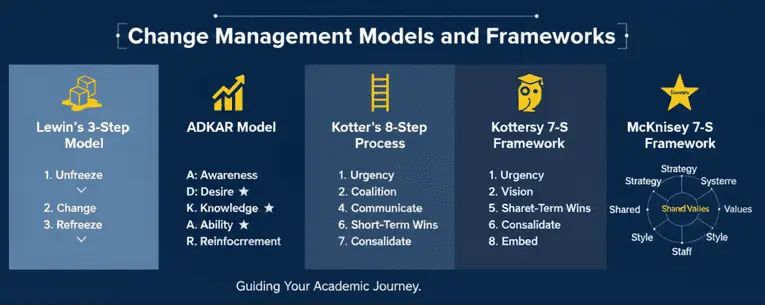
This area explores how structured models guide successful change initiatives. Students often analyse classic and contemporary frameworks to assess effectiveness in modern organisations.
Leadership and Strategic Change
Leadership plays a central role in shaping vision, managing uncertainty, and influencing employee behaviour during change.
Employee Engagement and Resistance to Change
Research here focuses on how employees react to organisational change and how communication, trust, and participation influence outcomes.
Digital Transformation and Technological Change
Digital systems, automation, and artificial intelligence continue to reshape organisations, making this area highly relevant for 2026.
Organisational Culture and Behaviour
Cultural values influence how change is accepted or rejected. This area connects psychology, sociology, and management studies.
Sustainability and Ethical Change
Organisations increasingly adopt sustainable practices, requiring structured change processes that align with ethical responsibility.
Public Sector and Non-Profit Change Management
Change in public services, healthcare, and charities presents unique challenges due to regulation, accountability, and stakeholder complexity.
Crisis, Resilience, and Post-Disruption Change
Recent global disruptions have increased academic interest in organisational resilience and crisis-led change.
Download Change Management Dissertation Topics PDF
Students often ask for a structured document they can review offline or discuss with supervisors. A downloadable PDF is available that includes a personalised list of change management dissertation topics prepared by academic experts. After completing a short form, students receive topic suggestions tailored to their academic level and research interests, helping them move forward with clarity.
List of Change Management Dissertation Topics for 2026
Leadership and Strategic Change Management Dissertation Topics
- The role of transformational leadership in managing organisational change
- Strategic leadership and change alignment in UK corporations
- Ethical leadership during large-scale organisational change
- Leadership communication strategies in change initiatives
- Gender perspectives in change leadership
- Leadership challenges in hybrid working transitions
- Executive decision-making during organisational restructuring
- Leadership influence on employee trust during change
- Strategic change management in multinational firms
- Leadership development programmes for managing change
Organisational Culture and Behavioural Change Research Ideas
11. Organisational culture and its impact on change readiness
12. Cultural barriers to change in traditional organisations
13. Managing cultural change after organisational mergers
14. The role of values in shaping change acceptance
15. Behavioural responses to organisational restructuring
16. Culture-driven resistance to change
17. National culture and organisational change practices
18. Cultural change in family-owned businesses
19. Organisational identity during periods of change
20. Measuring cultural transformation outcomes
Employee Engagement, Resistance, and Communication Thesis Titles
21. Employee engagement strategies during organisational change
22. Communication effectiveness in change management
23. Psychological contract and employee resistance
24. Employee participation and change success
25. Managing stress and uncertainty during change
26. Trust-building mechanisms in change communication
27. The role of middle managers in employee engagement
28. Employee voice and change outcomes
29. Communication breakdowns during change initiatives
30. Motivation and morale during organisational change
Digital Transformation and Technological Change Dissertation Topics
31. Change management challenges in digital transformation projects
32. Managing workforce adaptation to automation
33. Technology-driven change in service organisations
34. Employee training during digital change
35. Leadership roles in technology adoption
36. Resistance to artificial intelligence implementation
37. Change management in remote working environments
38. Cybersecurity change initiatives in organisations
39. Digital culture and organisational adaptability
40. Measuring success in digital change programmes
Change Management Models and Frameworks
41. Evaluating the effectiveness of change management models
42. Comparative analysis of planned and emergent change
43. Change frameworks in fast-growing organisations
44. Adapting change models for SMEs
45. Limitations of traditional change theories
46. Agile change management frameworks
47. Evidence-based change management practices
48. Integrating project management and change models
49. Change frameworks in knowledge-based organisations
50. Measuring outcomes of structured change models
Sustainability, Ethics, and Responsible Change Research Ideas
51. Managing organisational change towards sustainability
52. Ethical considerations in change management
53. Corporate social responsibility and change initiatives
54. Sustainable supply chain change management
55. Employee attitudes towards sustainability-driven change
56. Leadership ethics in organisational transformation
57. Environmental policy change in organisations
58. Long-term sustainability change strategies
59. Stakeholder engagement in ethical change
60. Measuring sustainability outcomes of change programmes
Public Sector, Healthcare, and Non-Profit Change Thesis Topics
61. Change management in UK public sector organisations
62. Managing policy-driven change in healthcare
63. Change leadership in educational institutions
64. Organisational change in local government
65. Non-profit organisations and change challenges
66. Public sector employee resistance to change
67. Performance improvement through change management
68. Governance and accountability during public sector change
69. Managing change under budget constraints
70. Digital change in public services
Global and Cross-Cultural Change Management
71. Cross-cultural challenges in global change management
72. Managing change in multinational organisations
73. Cultural intelligence and change leadership
74. Global virtual teams and change processes
75. International mergers and cultural integration
76. Change management in emerging economies
77. Global strategy and organisational change
78. Ethical issues in global change initiatives
79. Cross-border communication during change
80. Global leadership competencies for managing change
Crisis Management, Resilience, and Risk
81. Crisis-led organisational change strategies
82. Building resilience through change management
83. Risk management and organisational change
84. Learning from organisational failure
85. Change management during economic downturns
86. Leadership responses to crisis situations
87. Employee wellbeing during crisis-driven change
88. Post-crisis organisational recovery strategies
89. Organisational learning after disruption
90. Long-term resilience planning through change
Advanced and Doctoral-Level Change Management Research Topics
91. Change management research methods in organisational studies
92. Longitudinal studies of organisational change outcomes
93. Power dynamics in change management processes
94. Change management and organisational politics
95. Innovation-led change in knowledge organisations
96. Psychological safety during organisational change
97. Advanced analytics in evaluating change success
98. Change management capability maturity models
99. Organisational adaptation in volatile environments
100. Change management theory development for modern organisations
101. Systems thinking in organisational change
102. Institutional theory and change management
103. Strategic renewal and organisational transformation
104. Change management in platform-based organisations
105. Behavioural economics and change management
106. Digital ethics and organisational change
107. Change fatigue and long-term transformation
108. Leadership identity during sustained change
109. Governance structures and change control
110. Future research directions in change management
Five Change Management Dissertation Topics with Research Aims and Objectives
1. Leadership Styles and Their Impact on Successful Organisational Change
Aim:
To examine how different leadership styles influence change outcomes in UK organisations.
Objectives:
- To analyse transformational and transactional leadership approaches
- To evaluate employee responses to leadership during change
- To assess organisational performance after change initiatives
2. Managing Employee Resistance During Digital Transformation
Aim:
To investigate the causes of employee resistance in digital change projects.
Objectives:
- To identify key sources of resistance
- To examine communication strategies used by managers
- To evaluate methods for improving employee acceptance
3. Organisational Culture as a Driver of Sustainable Change
Aim:
To explore how organisational culture supports long-term change.
Objectives:
- To analyse cultural values linked to adaptability
- To assess leadership influence on cultural change
- To evaluate sustainability outcomes
4. Change Management in Public Sector Healthcare Organisations
Aim:
To assess change management practices within UK healthcare institutions.
Objectives:
- To examine policy-driven change initiatives
- To analyse staff engagement during change
- To identify barriers to implementation
5. Crisis Management and Organisational Resilience
Aim:
To evaluate how organisations build resilience through change management.
Objectives:
- To evaluate long-term organisational learning
- To analyse crisis response strategies
- To assess leadership decision-making
Conclusion
Choosing a strong dissertation topic in change management requires time, reflection, and academic awareness. A well-focused topic helps you demonstrate critical thinking, apply theory responsibly, and produce meaningful research aligned with UK university standards. Whether you are exploring undergraduate concepts or developing doctoral research, informed topic selection builds confidence and supports academic integrity. With clear direction and structured planning, your dissertation can become a valuable contribution to both academic study and organisational practice