
OBG Nursing Dissertation Topics for 2026
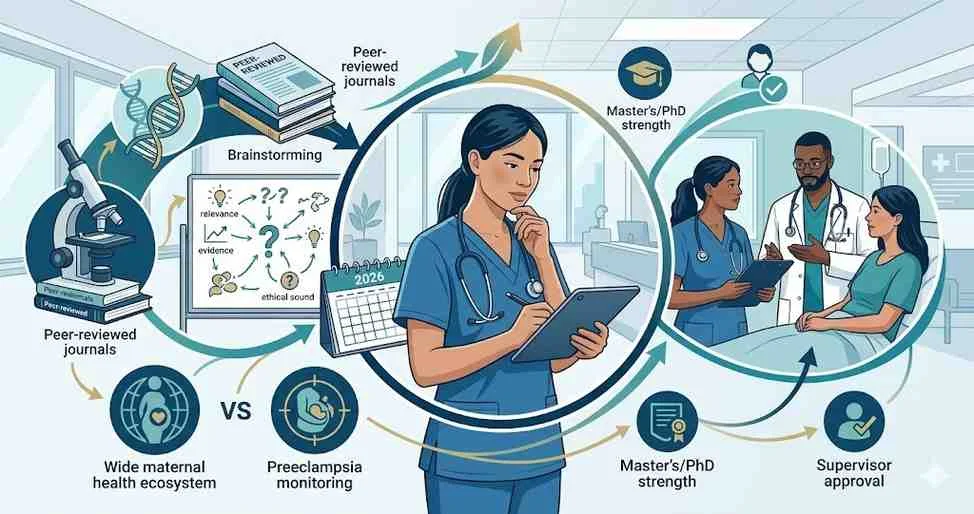
Common Questions Students Ask Before Choosing OBG Nursing Dissertation Topics
From student forums, nursing discussion boards, and postgraduate support groups, certain questions appear again and again. These reflect real confusion and genuine academic pressure. If you are searching for OBG nursing dissertation topics for nursing students, you may recognise yourself in these:
- How do I choose a dissertation topic that is relevant in 2026?
- What makes a research question strong enough for a Master’s or PhD level?
- Should I select a broad topic like maternal health, or a narrow one like preeclampsia management?
- How do universities assess OBG nursing dissertations?
- Are my ideas too simple for postgraduate research?
- How can I make sure my topic is evidence based and ethically sound?
- What are current research topics in OBG nursing that supervisors actually approve?
- How do I align my dissertation with real clinical practice?
This guide answers these questions clearly and practically.
Introduction
Choosing the right OBG nursing dissertation topic in 2026 is not simply an academic requirement. It is a professional decision that shapes your research skills, clinical understanding, and future career direction.
Obstetric and gynaecological nursing focuses on women’s health across the lifespan. It covers pregnancy, childbirth, postpartum care, reproductive health, gynaecological conditions, and neonatal care. Because this field directly affects maternal and infant outcomes, universities expect research to be ethical, evidence based, and clinically relevant.
Strong OBG Nursing dissertation topics connect theory with practice. They address real problems in maternity wards, antenatal clinics, neonatal units, and community health services. When your topic is well chosen, the research process becomes clearer and more manageable.
Why Choosing the Right OBG Nursing Dissertation Topic Matters
A dissertation is not just a long essay. It is an independent research project that demonstrates:
- Critical thinking
- Research design skills
- Ethical awareness
- Clinical knowledge
- Academic writing ability
When students struggle with dissertation planning, the main difficulty often lies in topic selection. In such cases, many nursing students turn to nursing dissertation help to refine their research focus, ensure academic feasibility, and align their OBG dissertation with clinical and university expectations before final approval. A weak topic leads to vague research questions, limited literature, and poor analysis. A strong topic creates structure and direction from the beginning.
A good OBG dissertation topic should be:
- Focused on one main issue
- Researchable using data or literature
- Relevant to current maternity care challenges
- Clear and specific
- Appropriate for your academic level
Undergraduate research often explores clinical practice improvement. Master’s dissertations usually examine policy, advanced interventions, or patient outcomes. PhD research contributes new theoretical or evidence based knowledge.
Key Research Areas in Obstetric and Gynaecological Nursing
Before choosing a topic, you must understand the core domains of the field. Established academic areas include:
1. Maternal and Child Health
Focuses on maternal wellbeing, infant outcomes, breastfeeding, and early child development.
2. Antenatal and Prenatal Care
Covers screening, health education, risk assessment, and preventive care.
3. Labour and Delivery Nursing
Examines pain management, emergency obstetrics, patient experience, and clinical decision making.
4. Postpartum Care
Includes maternal mental health, infection prevention, and recovery support.
5. High Risk Pregnancy
Studies gestational diabetes, hypertension, preeclampsia, and multiple pregnancies.
6. Neonatal and NICU Nursing
Addresses premature birth, neonatal resuscitation, and family centred care.
7. Reproductive and Gynaecological Health
Covers infertility, menstrual disorders, cervical screening, and menopause.
8. Ethical and Legal Issues
Examines consent, reproductive rights, and professional accountability.
9. Nursing Informatics in Obstetrics
Explores electronic health records, telehealth, and digital monitoring systems.
These domains form the foundation for both Master’s and PhD Research Topics in OBG nursing.
Download OBG Nursing Dissertation Topics PDF
Many students prefer structured resources they can review offline. An OBG nursing dissertation topics pdf can provide a curated list tailored to your academic level and research interest.
After completing a short academic request form, students receive a personalised PDF compiled by experienced nursing researchers. The document includes topic suggestions aligned with undergraduate, Master’s, and doctoral standards. This helps students compare ideas and refine their research direction before finalising proposals.
List of OBG Nursing Dissertation Topics and Research Questions for 2026
Below are more than 100 structured and researchable topics organised by subfield. These represent Current Research topics in OBG nursing and meet 2026 academic expectations.
Maternal and Child Health Nursing
- The role of community nurses in reducing maternal mortality
- Factors influencing exclusive breastfeeding rates
- The impact of maternal anaemia on birth outcomes
- Health education strategies for teenage mothers
- Cultural beliefs affecting maternal healthcare utilisation
- Socioeconomic status and prenatal care attendance
- The role of fathers in maternal health outcomes
- Postnatal home visits and infant wellbeing
- Maternal nutrition and low birth weight prevention
- Public health campaigns and maternal awareness
Prenatal and Antenatal Care
- Effectiveness of routine antenatal screening programmes
- Nurse led smoking cessation in pregnancy
- Screening for domestic violence in antenatal clinics
- Early detection of preeclampsia through nursing assessment
- Telehealth in antenatal monitoring
- Maternal anxiety during first trimester
- Vitamin supplementation education strategies
- Managing obesity during pregnancy
- Barriers to antenatal attendance in rural areas
- Antenatal counselling and birth preparedness
Labour and Delivery Nursing
- Non pharmacological pain management techniques
- Midwife led birthing units versus hospital delivery
- Nurse communication and maternal satisfaction
- Monitoring foetal distress during labour
- Emergency obstetric response training
- Use of partograph in labour monitoring
- Water birth safety and nursing supervision
- Infection control practices in delivery rooms
- Caesarean section recovery protocols
- Cultural competence in labour wards
Postpartum Care and Nursing Interventions
- Postpartum haemorrhage prevention strategies
- Early breastfeeding initiation practices
- Screening for postpartum depression
- Perineal care education methods
- Maternal sleep deprivation and nursing support
- Post caesarean wound care management
- Maternal mental health follow up systems
- Contraception counselling after childbirth
- Physical recovery after complicated deliveries
- Community follow up care effectiveness
High Risk Pregnancies
- Nursing management of gestational diabetes
- Hypertensive disorders in pregnancy
- Multiple pregnancy monitoring
- Preterm labour prevention education
- Placenta previa management
- Advanced maternal age and complications
- Foetal growth restriction assessment
- Infection management during pregnancy
- Substance abuse and pregnancy outcomes
- Thrombosis prevention in pregnancy
Neonatal Nursing and Neonatal Intensive Care
- Neonatal resuscitation training outcomes
- Kangaroo mother care effectiveness
- Pain management in premature infants
- Breast milk expression support in NICU
- Infection prevention in neonatal units
- Parental stress in NICU settings
- Temperature regulation in preterm infants
- Ethical issues in neonatal life support
- Discharge planning in NICU
- Developmental care nursing models
Reproductive Health and Family Planning
- Nurse led contraception counselling
- Awareness of emergency contraception
- Infertility support services
- Cervical cancer screening participation
- HPV vaccination education
- Menstrual health education programmes
- Reproductive health in refugee populations
- Endometriosis symptom management
- Polycystic ovarian syndrome education
- Family planning decision making factors
Gynaecological Nursing
- Preoperative counselling in hysterectomy patients
- Postoperative pain management
- Urinary incontinence management
- Menopause symptom support
- Patient education in pelvic inflammatory disease
- Cultural barriers in gynaecological screening
- Early detection of ovarian cancer symptoms
- Nursing role in fibroid management
- Body image after gynaecological surgery
- Chronic pelvic pain nursing interventions
Oncology Nursing in Gynaecology
- Psychological support for cervical cancer patients
- Chemotherapy side effect management
- Palliative care in advanced ovarian cancer
- Survivorship care planning
- Nurse communication in oncology units
- Screening awareness in high risk populations
- Quality of life after cancer treatment
- Sexual health after gynaecological cancer
- Pain management in oncology patients
- Family centred oncology care
Ethical and Legal Issues in OBG Nursing
- Informed consent in obstetric emergencies
- Confidentiality in adolescent reproductive care
- Legal implications of documentation errors
- Ethical dilemmas in abortion services
- Cultural sensitivity in maternity care
- Professional accountability in high risk deliveries
- Patient autonomy in birth planning
- Legal responsibilities in neonatal resuscitation
- Ethical considerations in fertility treatments
- Nurse advocacy in women’s rights
Obstetric Nursing Informatics
- Electronic health records in maternity wards
- Mobile health applications for pregnancy tracking
- Digital foetal monitoring systems
- Data privacy in maternal health records
- Telemedicine in rural obstetric care
Five Strong OBG Nursing Dissertation Topic Examples with Research Aim and Objectives
Below are structured examples to help you understand academic formatting.
1. Topic: The Impact of Antenatal Education on Reducing Emergency Caesarean Sections
Aim:
To evaluate whether structured antenatal education programmes reduce the rate of emergency caesarean sections.
Objectives:
- To analyse maternal knowledge before and after antenatal classes
- To compare delivery outcomes between participants and non participants
- To assess maternal satisfaction with education programmes
2. Topic: The Role of Midwives in Early Detection of Postpartum Depression
Aim:
To examine how midwives identify and manage early signs of postpartum depression.
Objectives:
- To explore screening tools used in maternity wards
- To evaluate referral systems for mental health support
- To assess barriers faced by midwives in detection
3. Topic: Nursing Interventions in Managing Gestational Diabetes
Aim:
To assess the effectiveness of nurse led education in controlling blood glucose during pregnancy.
Objectives:
- To evaluate patient adherence to dietary advice
- To measure maternal and neonatal outcomes
- To identify challenges in patient self management
4. Topic: Family Centred Care in Neonatal Intensive Care Units
Aim:
To analyse the effect of family centred nursing care on parental stress in NICU settings.
Objectives:
- To measure parental anxiety levels
- To explore communication strategies used by nurses
- To evaluate clinical outcomes in neonates
5. Topic: Ethical Challenges in Adolescent Reproductive Health Services
Aim:
To investigate ethical dilemmas faced by OBG nurses when providing care to adolescents.
Objectives:
- To identify common ethical conflicts
- To examine professional guidelines
- To propose practical ethical frameworks
Conclusion
Choosing the best OBG dissertation topics for my thesis is not about selecting the most complex subject. It is about selecting a focused, researchable, and meaningful topic that aligns with your academic level and professional goals.
In 2026, obstetric and gynaecological nursing continues to evolve with advances in maternal care, digital health, ethical practice, and neonatal support. Your dissertation should reflect current evidence and clinical realities.
Approach your topic selection with clarity. Define a precise research question. Ensure ethical responsibility. Use reliable literature. Whether you are writing a Bachelor’s project, OBG topics for Master’s dissertations, or OBG Topics for a PhD thesis, your work should contribute thoughtfully to women’s health nursing practice.
With informed planning and structured thinking, your dissertation can become a strong academic and professional milestone.